
Incubation Case Study: The Flow Country, Scotland - taking peatland restoration to scale
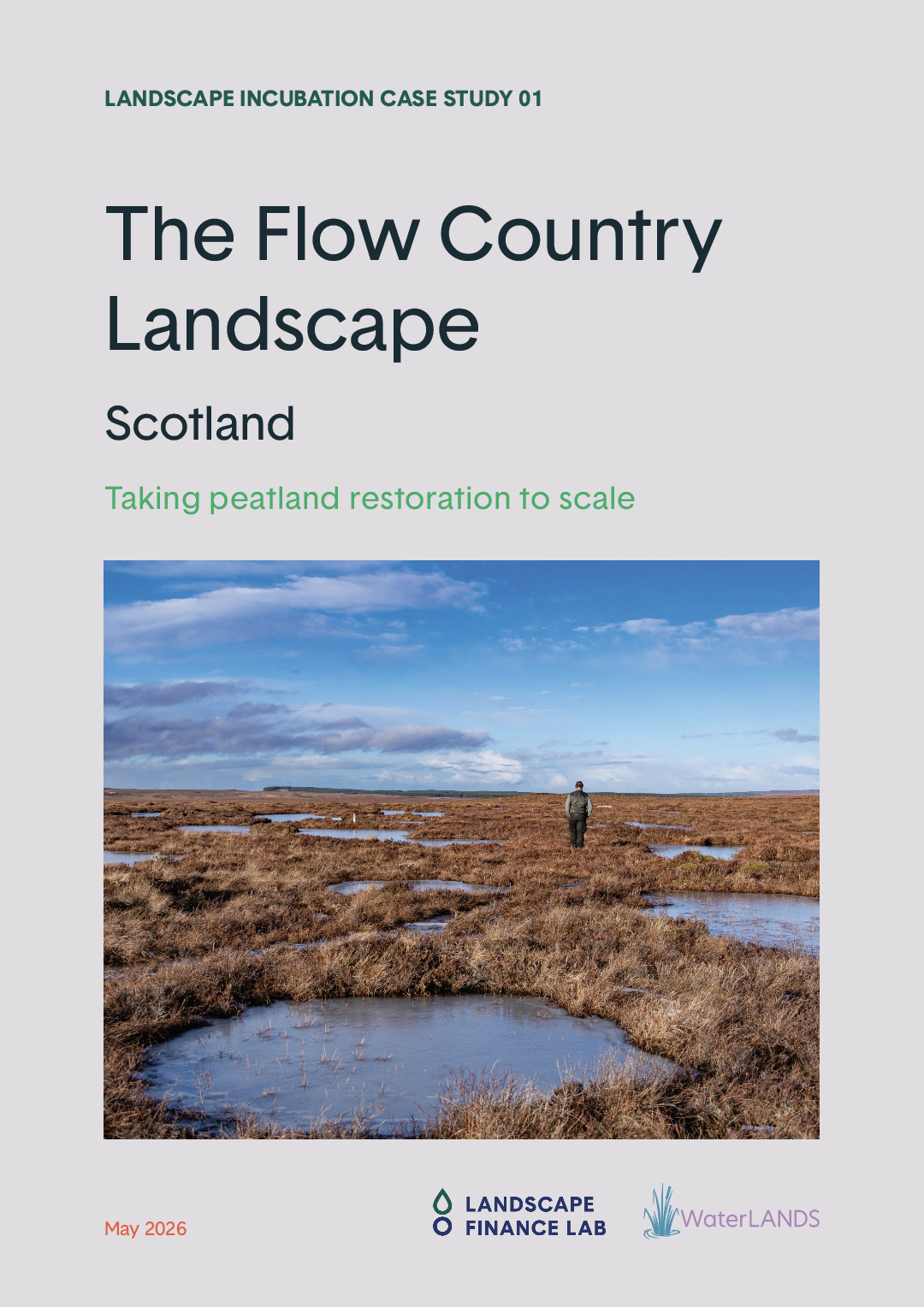
In the remote peatlands of northern Scotland, a multi-stakeholder partnership has transformed shared concern over the landscape's future into a structured, investment-ready landscape restoration programme, in what is now a flagship UNESCO World Heritage peatland site. In the first of our Landscape Incubation Case Studies series, we explore how the landscape incubation process supported the Flow Country Partnership in developing robust community-led institutions, models and plans capable of attracting green finance — demonstrating how ecological ambition and social legitimacy can unlock finance at scale.
The challenge
World-class ecology, fragile communities, fractured trust
The Flow Country holds the world's most intact blanket bog system, yet nearly half its peatland is degraded, and the communities that depend on the land have faced decades of declining opportunity. Past waves of externally driven investment - wind energy, land speculation - bred local scepticism toward emerging carbon market-based green finance.
This context shaped the central challenge: how to structure peatland restoration finance in a way that keeps value within the landscape, earns community trust, and can attract private capital at scale.

The case study’s structure reflects how the Flow Country, supported by the Landscape Finance Lab’s incubation process, progressed through the five elements of a landscape approach - from the formation of the landscape partnership, through a shared understanding of the landscape's challenges and opportunities, to the co-creation of a vision and roadmap for the long term, sustainable financing of the restoration. It explores how ecological priorities, stakeholder relationships, governance arrangements, and revenue models co-evolved over time, culminating in the establishment of a dedicated governance entity and a commercial delivery arm.
A virtuous reinvestment cycle for landscape and community
The Flow Country's Green Finance Initiative proposes a blended model that combines public restoration grants with voluntary carbon market revenues. Critically, the Lab supported the Flow Country to design a mechanism which allows profits to flow back to the charitable parent organisation established to oversee the long term future of the landscape, ensuring community benefit projects and further restoration can be funded for generations to come.
What we're doing in the Flow Country is new. It's always hard to be the first to do something.
Valuable lessons can be learned from charting the evolution of the Flow Country’s partnership and governance model, and its emerging investment strategy. The experience offers relevant insights for other large landscapes seeking to align community leadership, restoration outcomes, and long-term financial resilience.
Key Lessons
Several insights emerge with broader relevance for landscape-scale restoration:
- community and local economic resilience, grounded in an ecologically resilient landscape, resonates more powerfully than the prospect of uncertain carbon payments as an entry point for land manager engagement;
- governance and delivery capacity matter as much as business model design;
- ecosystem service diversification may reduce dependence on immature carbon markets;
- patient, place-based engagement builds the trust necessary for transformative change;
- carbon finance shows long-term promise, but public funding and strategic grant programmes remain essential to de-risk early investment and demonstrate viability.